Friday, March 19, 2021

When Skies are Too Blue


The Pandemic has given all of us some time to reflect and in doing so, some interesting questions have popped up. Now 10 weeks into researching and writing a book on nutrition and human health, I noticed the extremely blue skies during a slightly volatile winter.  The sky was just "too blue" for early March and it made me wary.  Blue skies belong in deserts not East Coast rural farmland. Was I finally losing my perspective after a year at home or is this nagging feeling that something is wrong worth looking into?

I suppose I started noticing the sky after my granddaughter was born. Always fascinated by clouds and stars myself, I hoped that she would come to Grammie's and sit on the back stoop and imagine what the clouds were.  But as i dreamt of those days, I got a funny feeling that might never be possible.  I hadn't seen actual CLOUDS in a while--you know, the kind that move across the sky and blot out the sun for a few brief moments only to travel on as quickly as they had come. Regardless of what the weather predicted, the skies here were overcast or completely clear.  The few times that the fluffy, white variety made an appearance, they were low on the horizon and never high up in the sky.  What had happened to the clouds that I knew as a child?  What did that mean for the long summer ahead?  What did it mean for the environment that depended on them? 

I had stopped listening to the panicked news reports of greenhouse gases causing global warming a long time ago.  I did not doubt there was something out there that was wrong with the environment but I knew carbon dioxide gas was not the cause of the heat wave that would hit every July nor did it keep my car windows from icing over for several months in the winter. 

 My education as a kid had been a good one.  As a child of the Space Race when the term STEM (Science Technology Engineering and Mathematics) was first coined, a good understanding of science was one thing I had been given.  Following that with a college education that included physical science, sociology, psychology, microbiology and human growth and development, I knew the mass of a carbon dioxide atom  was not large enough to hold heat for very long.  To further punctuate the misguided nature of greenhouse gases, conduction of heat required sustained contact between molecules  and gas molecules did not touch each other often enough or long enough to do that.    As a farmer/ gardener, I had experienced the difference between soil temperature and air temperature every March.  Planting could start when soil temperatures reached 55 degrees even when air temperatures were much lower.  The sun warmed the Earth, not carbon based gases.

But if greenhouse gases weren't destroying the clouds as computer models said so, what was causing this phenomenon.  More importantly, why did no one realize that without clouds, the suns rays would not be reflected back into space where such radiation could do little harm. 

Surely, science had not become that ingrained into computers that people did not realize that clouds had a vitally important role in redistributing moisture and minerals around the globe.  As beautiful as they are, clouds perform a major cleaning process in the environment by taking high concentrations of mineral compounds (gaseous) and with water as a kind of glue, returning them to farmland and vegetation far away from where cities produce the nasty smog.  

As I was pondering the science that was so simply taught to me in elementary school, I wondered if people understood why greenhouse gas theory was wrong and why blue skies were not a good thing to have.  It had been fifty years since the Clean Air Act of 1970 was passed, had they been taught something different than what I had been taught? 

I gave one more look into the bright blue and cold Spring sky and realized this was a concept I needed to research further.  What had happened to the clouds? And sadly, why was noone concerned about their disappearance? 

Friday, March 5, 2021

Pharmacy Deserts: Inequality or Lifestyle Choice

 Several years ago, I was privileged to attend the 65th National FCCLA Convention (Family, Career, and Community Leaders of America). As a state advisor that year, my state officer and I enjoyed a week of hard work and fun times in downtown Chicago. For many of the 5,000 or so participants, it was an exciting to see a part of the US that differed tremendously from their own home towns. Quite similar to the Country Mouse/ City Mouse fable, it was a learning experience even for those with some travel under their belts. 

All of us have adopted different habits and hobbies during the pandemic and one of mine is reading headlines.  Notice I said 'headlines' and not 'news'.  There is something telling about the author in the headline.  Is it to shock the reader into opening the link or is it just general information that might be reported by a dozen different news outlets? The headlines that cause me the most concern are the ones that claim inequality without any understanding the community they are describing. 

Certainly, our time in Chicago that year, and the years we have gone to Washington, San Diego, Orlando and Nashville have been eye opening for these young people.  But, what about all those city dwellers who have only experienced country life from the balcony of a resort hotel or ski lodge.  Just like the City Mouse and Country Mouse, journalists and bloggers who sit in their 12th story apartments have little direct knowledge of what the situation really is. 

Today, the headline that caught my eye was proclaiming great concern over "pharmacy deserts".  It made so little sense to me, I had to wonder if it was a typo.  But, alas, the term was correct at least as far as it goes.  

'Desert' has become the new descriptor for anything that is more than a few blocks away or not available on demand. When you live in a place where distance is not measured in blocks, you have a different meaning for the word - convenience.  The time has come for writers and those in communication fields to evaluate news on more than just convenience and immediacy. 

During that week in Chicago, it was a thrill to be able to have four restaurants, a shoe store, grocery store and deli and an emergency clinic all within a short jaunt.  But the vast majority of the US population does not live in such a world and to claim we are disadvantaged, disparaged or treated unequally is not a failure of the system but a failure of some who think everyone must live the same.

The reality is that, most of us choose to live in a situation where we have to wait for things. We learned long ago that if we needed and wanted it immediately, there were ways to get it and if we couldn't get it, it was probably because it wasn't available.

What those who judge do not understand, is that rural communities might not be the first on the list, but they will make quicker use of the vaccine when it arrives and have fewer snafus along the way. The state of West Virginia has already proven that with one of the highest rates of vaccination in the country. 

It has been a testament to the American spirit that while our national government continues to be divided to the extreme, people have creatively addressed the challenges of this pandemic to make it work in spite of leadership.  While some worried about naming a community that didn't have a pharmacy, nurses and doctors figured out how to transport vaccines and get them to patients in a timely fashion. All without Facebook posts and 6 o'clock news coverage. 

The people who do will make this work even if the people who lead are in the way. 


Friday, February 5, 2021

The Computer and Customer Service


For the first time in over a month, I am not worried about running out of heat.

Oh, I haven't gotten a new furnace or changed suppliers or even gotten an emergency delivery, although we did call a few days ago . I have just learned how the computer thinks.

The revelation didn't come from the company or a short blurb on the news, it came from listening to a disgruntled customer with another company in another part of the state. The computer said she needn't worry either. In her case, a delivery before being nearly empty was considered bad business.

So, I got out my manual, did some quick math and found out the computer was right, I had nothing to worry about. Well, at least until the point when the computer was wrong. Do you suppose the computer knows the dog door sticks when it is windy? Surely it understands the

upstairs storm window is broken this year and then there is the weather to consider. Hmm, maybe I will worry after all.

The shift to computer directed efficiency is not a bad one. The disconnect is when staff cannot step into a customer's shoes and explain how it works. Unfortunately, such breakdowns in customer service are commonplace in many computer dependent businesses.

My love affair with computers started in the late 1970s and I have owned one for all of those 40+ years. Computers are not the issue here. Somewhere along the line, we started to believe the myth. Computers cannot think, resolve customer complaints or put business policy into simple language. Moreover, blaming human inefficiency on a computer is like blaming the hammer for hitting your thumb.

It's time to remember that a computer is merely a tool. It cannot correct our mistakes or create customer loyalty – only knowledgeable human communication can do that. Perhaps businesses need to sacrifice efficiency and think like a customer instead of the other way around. Expecting customers to do the sacrificing has never seemed like a good business plan.

Friday, January 1, 2021

COVID Relief: An Average Americans Take

A week or so ago, Congress passed an annual funding bill to which approximately $900 billion in COVID relief was attached.  President Trump reluctantly signed the bill, but not before demanding a larger $2000 stimulus payment. On December 31, many Americans found a $600 payment added to their bank accounts whether they needed the money or not.
 
What was driving this 11th hour spending spree during the waning days of a presidential administration?

With the pandemic came a fear that few of us had seen, not just for our health but for our standard of living. The Great Recession has not been in the rear view mirror long enough to forget how tax cuts and hastily crafted funding for large corporations left thousands unemployed and failed to save countless families from losing their home.  But here we were, government was not just repeating this move once but twice and the new administration was promising a third round of payments. 

There is no doubt in my mind that countless citizens on both sides of the aisle have contacted their representatives requesting caution.  Certainly, this is not a good time for people in need, but there is never a good time for people in need. Why is this time creating such an emotional response from our elected officials?

For more than forty years, US leaders have bounce back and forth between economic growth and healthcare as political priorities. Now, they have come together to create a monster of rapid spending that has cost the country billions of dollars in fraud. 

Respectfully, who do they think they are kidding? Bipartisan or not, there are surely better ways of handling this money and whatever funds will follow in the future.

The American people deserve better. I am just one of millions of Americans who have survived decades of economic fluctuations and personal trials. We have owned businesses and farms. We have lost our savings, struck it rich but mostly just gotten by. We have been professionals, laborers and yes, sometimes been unemployed and destitute. Mother Nature has seen us burned out, flooded, damaged by wind and baked by drought. We have educated ourselves and our children while becoming homeowners, saving for retirement, and paying more for health insurance than we did for food. We are Republicans, Democrats and the Undecided.  We are young and old and as diverse a group as one can be in this country. We have lived in the real world and, for the most part, solved our problems without government help.

All of this makes us uniquely qualified to advise government on what it needs to do. Unfortunately our opinion doesn't matter. 

Our portrayal as a deeply divided country is perpetuated by marketing specialists whose data comes from Twitter feeds and polls that pop up during Solitaire games.  Ironically, this data supports a government which then uses it to steer America into debt and poverty.  

It is not COVID-19 that is our greatest danger. America will survive. There will be a cost and like every time before, it will be citizens that pay that price, not our leaders. 

As a country, we are not waiting for COVID to end or a vaccine to save us. We support our local restaurants and service providers. We buy tickets to virtual concerts and ‘run' in virtual fundraisers.  We give to churches and charities and, unlike government, we know which ones work and which ones don’t.  

We have walked this road before and will walk it again. We are the experts here, not the ones who try to predict the future as something dark and unforgiving.  We support our community silently and behind the scenes without Facebook or Twitter recognition. There is a job to be done and we are doing it.

COVID gave this country the opportunity to change a 40-year path that resembles a Hunger Games spinoff. Government takes from the easiest targets, gives it to those who make promises of better times, and then makes us fight each other to get it back - not something to be proud of. Is it?

The sad part is that our leaders  have worked so hard to maintain a system which has not worked for the average American for a long, long time.   Additionally, each time, it puts this country closer and closer to the brink of being financial unable to serve anyone.

In the end, it will not really matter. Americans will feed their families, go to work, raise their children and bury their dead whether our country is on solid ground or not.  Maybe that is what makes America truly great. 


Monday, December 21, 2020

Modern Science: AI: Always Artificial, Never Intelligent

I could see the flowers from across the room. The arrangement was lovely to say the least.  The colors were bright and inviting, in no way like so many monochromatic decorative arrangements that adorned tables everywhere.  I had this urge to walk over to them, touch them and smell them. It was so rare these days to see arrangements of real flowers, I wanted to compliment the staff in bringing color to an otherwise bland functional area. 

"The flowers are lovely," I said to the receptionist. 

"Oh, those. They just changed them out yesterday. The previous ones had been there for years and were all dusty," she commented pleasantly.  

I had been deceived. . . . .again.  Oh, it wasn't that I was actually angry or even surprised - just - disappointed.  Like so many experiences these days, artificial is somehow preferred over real. Artificial wood. . . Artificial flowers . . . . Artificiall Intelligence. 

As a parent I am ever so grateful that Alexa, Siri and countless apps were not available to "help" my children.  They were smart enough to circumvent the rules when it suited them. They did not need any help in that regard.  But like the silk flowers that are now both common and surreal in their use, these examples of artificial intelligence are always artificial and never intelligent. 

How AI Corrupted the Study of Science

For older teachers who saw the gradual but invasive creep of micro-chipped technology into school curriculi, there was no missing the lack of problem solving and general comprehension that showed up all to frequently in simple mistakes and quizzical looks when students had no idea what was being conveyed. This wasn't a difference of generational language but an empty spot where life skills and useable knowlede was stored. 

As teachers, we had been told time and time again that rote memorization was not needed since the inventon of the internet--that ever question would be answered simply by asking the question.  No one every imagined that the primary information system of the World would be corrupted to the point that it is imposible for many to tell what is truth and what is fiction. 

It is this World into which the study of climate change has change the way we do everything and the one that we can no longer trust to produce quality scientific information. 

Dealing with a Future of AI

Since the passage of the 2009 Education for Innovation Act under President Barrack Obama, science has become about machinery and testing, not thought and complex problem solving. The lag time in identifying COVID-19 and coming to terms with an acceptable treatment protocol was a clear indication that operating technology will produce the same results as a well educated, practiced brains. 

So how do we deal with a public that depends on a device for everyday decisions? That is the scary part of these problem. 

A week or so ago, The Time Machine, a 1960 award winning film adaptation of the H.G. Wells book by the same title, showed up on one of the old movie channels.  It has easily been 50 years since I saw this movie for the first time and I can still remember the impressions that impact how I view technology.  For those who have never seen it or the 2002 version - which is a bit more focused on special effects - it is a tale of what happens when disaster comes to an civilized but unaware population. Dividing into two 'species', for the lack of a better word, one becomes childlike and dependent while the other cruel and driven.  The stronger half keeps the planet artificially vibrant while the other live ignorant that they will at some point become slaves to the other. 

As society passes its 75th year as part of the computer age, the machine we considered a great invention is showing signs of tarnish and malfunction.  If it hasn't already done so,the likelihood that humans will soon find that they have misled themselves is very real. By putting too much faith in a computer that can neither think nor feel and becoming tethered to multiple devices, our experts have become the mindless children of future time.  

Like the flowers at the beginning of this post, knowledge that is mechanical and crafted out of predictable patterns cannot take the place of honest ingenuity and reason.  The sad part is that our leaders may be too embarrassed to admit they were duped and continue on a dangerous path out of pride.  Will the rest of us be able to stand up to that blind authority or will we realize the mistake in time to save ourselves? 

Friday, October 16, 2020

Election 2020: The IRS, The USPS and the Responsible Voter


To Present and Future Voters,

It's Friday morning and with nothing better to do, I decided to contact the IRS. The decision was not as random as that sounds. With a missing stimulus payment and a set of April-mailed paper returns hanging out in Government-No-Man's-Land, there was a purpose in the phone call. Besides, what else is someone my age suppose to do while “STAYING SAFE AT HOME”? There is only so much you can clean, plant and bake as we all know.

AN EYE-OPENING CONVERSATION.

I had tried this before with little success, but today was different. Using a phone number from an old IRS notice, I reached a human being within a few minutes. The agent was pleasant and willing to do what he could to help me out. After a few good laughs about COVID-19, he basically said there was nothing he could do to move the process along, We continued to chat for a while and he provided some insight into life inside the IRS. For the first time in a long time, I came away with more understanding than frustration in regard to our chaotic government.

Certainly, I could go into more detail but a few of tidbits from our conversation are below:

  • IRS Processing Centers began closing in mid-March 2020 and did not start to reopen until early June.

  • At least one processing center received so many pieces of mail that it could not securely store all the returns. The assumption is that the struggling Post Office has securely handled the overload - keeping thousands of pieces of mail in its own facilities. (Hmm?*my reaction)

  • While some IRS Processing Centers have reopened and others continue to come online, only 50% of its workforce may be working as of early October.

  • Prior to COVID-19, normal IRS operations were estimated to be months (yes, he said monhs) behind due to budget cuts and government shutdowns. Every time the Federal Government shutdowns, employees cannot even enter the building because of the sensitive nature of the information in side.  

  • The IRS website clearly states that aid for taxpayers is “limited” and “DO NOT CALL” if you have questions about any mailed returns.

  • The country is two and a half months away from the beginning of a new tax year with MILLIONS of 2020 tax returns yet to be processed.

WHY AM I WRITING?

At this point, I have rewritten this part a half dozen times or more. Being a school board representative for six years was a hard lesson in handling political discussion - like dynamite - one mistake and you have an explosion. I want to be clear – I am not here to tell you WHO to vote for. My only purpose is to provide a perspective about government that few people understand – that is – unless they have served as an elected official.

By design, the power of those who are elected is limited. Simply put, their role is to provide direction for government and to supply the funding for its functions.  THAT'S ALL. It should be mentioned here that actual spending is the responsibility of each agency. Funding without direction and direction without funding are two sides of the same poor leadership coin. In my mind its like losing weight. Reducing calories alone without good planning and understanding can jeopardize your health as much as weighing too much cam. The anorexic person can never cut calories enough and the obese one can never satisfy their hunger.  Government is the same. As a voter, you are responsible for seeing that you elect someone who will provide a healthy balance between funding and purpose.  That is your function in a representative democracy.


On August 22, 2020, Congressman Ben Cline (R. Virginia) voted against H.R. 8015 supporting increased funding for the U.S. Postal Service. Even though the bill passed with bipartisan support, it was largely a symbolic gesture and was not acted on by the Senate - being tabled until after Nov. 3rd. But, what could a lack of USPS funding actually mean for this district?


To take it a step further, if Congress cannot determine how money is spent, it can also not determine how it is saved. Certainly, budget cuts could come from salary reductions for upper management who may have never handled a letter, but they could also mean the loss of mail carrier jobs locally. It could mean the end of expensive travel and conference trips or it could mean that carriers have 5 hours to cover a route that normally takes 6.  As expenditures go, it could mean salary increases for mail carriers and sorting staff or it could mean a few thousands spend on public relations campaigns to make citizen think everything is good when actually it isn't.

So, if I am not trying to tell you who to vote for, what am I trying to do?

The goal here is understanding how your vote impacts what type of government we have in January 2021. Here's a few things to consider.

  1. Voting for tax cuts does not make our government more efficient or cheaper. Instead it often leads to raiding its funds for other services - like the IRS and USPS.  It can also mean borrowing money from other countries or syphoning off savings in Social Security. In the end, every day taxpayers pay more in lost services and increased fees for the services they do have.

  2. Voting for a "Party Loyal" candidate is where government gridlock begins. Do you 'always' vote red/blue? 

  3. Voting for a "Can't Let Them Win" candidate divides a community. Compromise is an important and necessary skill for any elected official.  Us vs. Them attitudes divide people and allow special interest groups to gain power.  Moderation may not be interesting but it is effective.

Well, I guess that is all I can say about this.  Thank you very much for taking the time to read this point of view. I can only hope you have found something useful in it. 

 
Sarah Schrumpf-Deacon
 Former School Board Member
Proud USPS Patron
Very Frustration US Taxpayer

Saturday, August 1, 2020

Rights of Government or Abuse of Power? Late Fees in Lockdown

 For the most part, my husband and I have taken this Pandemic thing in stride. We planted a garden, landscaped the yard, cleaned the house and gave up going out to dinner on Friday evenings.  We have not developed anxiety because of our age (high risk y'know) or stressed too much about the postponing of nearly every travel plan we had for the year. In general, we were model pandemic survivors.


WELL . . . 

That was until, life began to get back to normal.  

Never in my wildest dreams did I expect to find all levels of government operating as if this was a normal year and refusing to adapt to a different way of life. 

As much as I had hoped to spend the late summer and fall, writing a positive take on pandemic life, my life has been overshadowed by government agencies that are operating fully believing that life is normal and restrictions and flexibility are for others. 

The sad part of this is that the mindset isn't just a single incident but a pervasive attitude that they have a right to be unyielding and unresponsive.  With the Election 2020 just a few months away, one might think there is no real time to make a stand.  As a Virginia Resident, there is always an election on the horizon.  You see, Virginia is one of two states which have off year state and local elections.  

Over the next few weeks, I'll be spending some time preparing posts which I hope with educate as much a entertain those who have a some what skewed viewpoint of how state, local and federal government operate and "abuse" taxpayers in the process. There are so many quirky little things that every citizen should know.  

More Later


Saturday, July 25, 2020

In the Absense of Good It Must be Outsourced (Updated)

Twenty years ago as a local reporter, I listened as each level of government made the case for outsourcing its low level jobs to support private business.  Efficiency, lower costs and all manner of other reasons were brought out but the little voice in the back of my head said, "This isn't going to be good." I had no idea, then, that it would only take a unscripted viral pandemic to highlight all the problems that "government efficiency" set into motion. 

In my mind there was, and still is, no substitute for the lady at the front desk who has been with the company for 20 years, or the bottom level jack-of-all-trades that knew more about the company than the person with the big title and matching paycheck. While it might have been a surprise to elected officials, the Great Resignation was ever so predictable as the last highly skilled, excellent memory and thinking skills workers make their exit from today's workplace. It is even sadder that many of these people had to leave it, not in retirement but in a traumatic and sudden death.

What was once a well-managed, highly accountable businesss community is now a complicated network of companies that are so disjointed no one has accountability. it is the person at the front desk, the waitress at the counter or the receptionist at the doctor's office who now listens to the complains and the customer who must live with the errors that are never corrected,, the bills that never come in the mail and the sheer anger that comes into play when the answer is "The computer says. . . . ."


The image here was 'borrowed" from a company website Outsourcing Insights.  The website was chosen totally at random and with no prior experience on my part.  And while I may not think much of the practice of 'outsourcing', the use of this symbol in no way indicates that the business is anything but professional. Illustrating the complexity of the outsourcing model better that I could do in a 1000 words or less, the image shows two computer users bridging some type of communication gap with multiple tools and people. 


My question has always been - How does involving more people in off-site locations who know nothing about you as a customer save time and money? Perhaps it works for the business but as a customer, I can't quite agree with the philosophy. 


Outsource was a natural offspring of the computer age that was necessary to support a world population that has tripled since the 1950s.  It wasn't about making something better, it was about creating work for all those people who were willing to work for low wages and benefits. 


Tell me again why the single income household is a bad idea.  Certainly, I wanted to do something with my life besides dust and do dishes but it seems like we could have come up with something better than spending countless hours on a phone talking to a person who is simply looking at a computer screen and trying to find an answer to a problem he/she has never even experienced. 


As we get a break from the pandemic over the summer, it will be interesting to see if customer service and call centers will become even more dysfunctional or whether they will actually become helpful. 


As much as I hope, customer service improves, I think it will take more than a few months of forced online shopping to do the trick. 😉


Monday, December 24, 2018


To All My Readers Who Made This Dream a Reality

Thursday, September 6, 2018

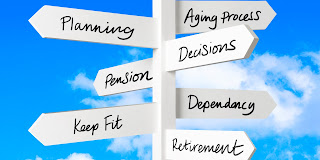
Practicing Retirement

Update: It has been three years since this post was written. The pandemic changed our retirement plans considerably. Perhaps it is time create the next installment "Surviving Early Retirement".  :)
It was a normal afternoon in mid-July and the phone rang. Like usual, I ignored it expecting for my husband to be calling and telling me that he was working late - sigh - AGAIN!.  The company for which he works has used the generous tax break awarded to them in the last few days of 2017, to go on a massive upgrade of equipment and infrastructure, most of which the maintenance crew must install. My husband is a senior (translation: oldest) member and tends to be the equipment whisperer, often sticking with a project long after quitting time.  It had become commonplace for him to work 6 days a week and a minimum of 50 hours. But this phone call was something totally different.

"They are taking me to the emergency room. I have been in an accident," squeaked the voice into the answering machine. I could tell from the high pitch and rapid words coming from my normally stoic husband that this was more than just a precautionary measure.

"What! Wait a minute. What happened?" I countered as I picked up the receiver to ask a million questions.  Yes, they were on their way to the emergency room and it was only his little finger but there had been lots of blood and they couldn't tell what the damage was.

Six hours and two emergency rooms later, the old boy came home with this tiny bandage and a couple of prescriptions. What was going on here?  The last time he had been injured on the job his whole right hand had been scratched and chewed like a piece of old meat.  What was the deal?

Two days later when the orthopedist examined him we realized this was not going to be a go-back-to-work-in-a-few-days situation  This was going to be a six week practice run for retirement - an experiment of sorts to see what it was going to be like for a man who had worked since he was 16 years old and had answered to someone else's authority for most of those 40 plus years.  All I could do was laugh although you could tell he was not so thrilled about the prospect of staying home with me for that period of time.

A year earlier, I had left teaching on sick leave in the middle of the year and not returned.  It had been a rough transition for me and I expected it to be an even rougher one for him. So, we are taking this opportunity to pass on some advice to those who may find themselves looking at retirement in a few years and not sure how to approach it.

1. Expect to Grieve A Little

While I had my "honey-do" listed primed and ready, my husband's reaction was something more than embracing a chance to do all those things we never seemed to have time for. My husband was lost.  Time off before had been a chance to rest, relax and do what he wanted to do.  Now there was no routine, too much sleep, endless television and the reality that this could be a couple of decades of endless 'freedom'. That became a scary event.  He missed his co-workers. He missed the solitude of the drive to and from work, He missed the hard work and someone needing his expertise.  He had lost something important and for a few days he just thought about that lost and how it could impact his future.  I realized myself a year before that it while I was relieved on one hand, there was a hole in my life. It takes time to fill that space but giving yourself time to do so will make the rest of retirement much happier.

2.  Make Budget Adjustments Prior to Retirement

Regardless of how well you plan for retirement, there will be a shift in how your budget works. If you have been a household of weekly paychecks like ours, suddenly going to monthly benefit checks can be an upheaval.  Even for our short practice session, payments had to be changed. my suggestion is to pay bills ahead to give your budget a chance to ease into the change.  Ideally, you have reduced or paid off all debt but sometimes that isn't possible. Keep your future budget in mind as you consider any large purchases and refinance options. Remember - just because the bank says it is a good idea, doesn't mean it will be right for your future self.  Retirement income does not generally increase over time and even good planning can't keep unexpected events from happening. Be cautious. 

3. Don't Expect Great Changes to Come - Ever!

Like many people our age, we have been planning and talking about retirement for what seems like forever.  We have talked about traveling. We have talked about health issues, We have certainly talked about money and we have talked about ways to fill the gaps that will certainly be there.  Both my husband and I are/were happy in our jobs.  We liked working.  Without that structure in our lives, neither one of us does well. Somewhere about week three of this trial retirement, I realized that retirement could not be that much different than work life for my husband.  It was then that we put some of his work habits into practice at home.  After 40+ years of living with the same type of routine, the chances of us ever doing anything different just increases our chances of being frustrated and unhappy. Yes, we will travel.  Yes we will work less and spend more time reading, talking to friends and experiencing life.  It just isn't going to all be fun.  After all, fun isn't fun if it happens every day.

My husband is happily back to work these days. He is a little slower than before his time-off and his hand is still a bit tender but he is back to normal.  I recently asked him if he had learned anything about possible retirement in a year or so.  He looked off into space and said, "Maybe".  

Personally, I am glad for the sudden long-term absence my husband has experienced.  Those few weeks gave both of us a perspective that neither of us would have had otherwise.  I hope it means that when the time comes, real retirement will be an easy and welcome transition and not a source of concern.  As my husband said, "Maybe".